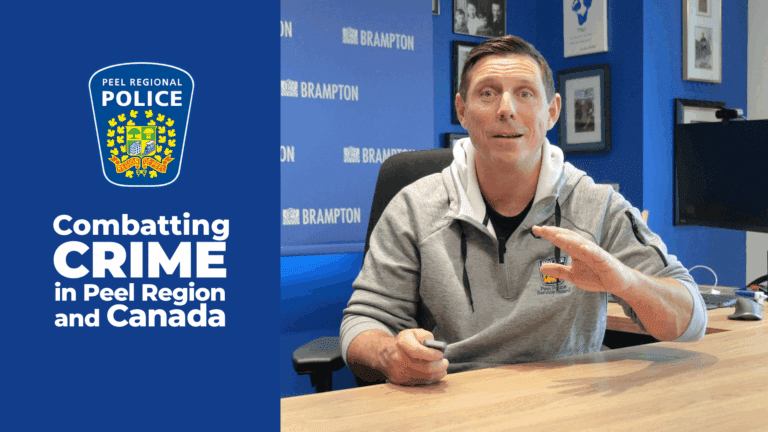

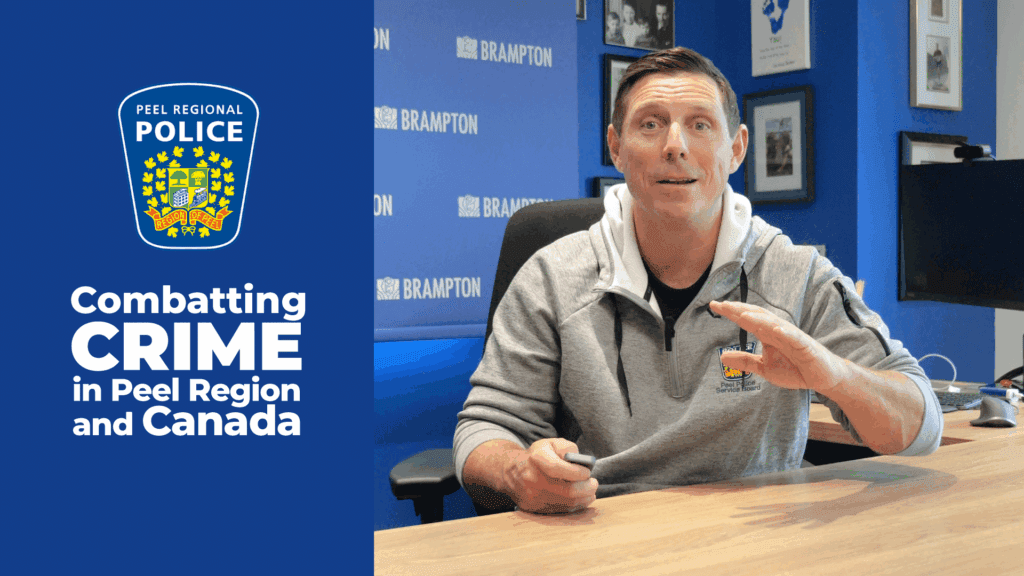
Community safety is the number one issue I hear about from residents in Brampton, and it continues to be my top priority. Complete the brief form below to stay informed on community safety. Use the Quick Video Links to skip ahead in the video to get more info on the topics that are of interest to you.
Quick Video Links
Stay Informed
At town halls and in everyday conversations, the message is consistent. People want to feel safe in their neighbourhood, on their street, and in their home. That expectation is fundamental, and it has guided the work we’ve done over the past several years.
Addressing a Growing Challenge
A few years ago, it became clear that we were falling behind. Brampton and the broader Peel Region were growing rapidly, but policing resources were not keeping pace. That gap had real consequences for response times, enforcement, and overall community safety.
We made a decision to change that in a meaningful way. From 2023 to 2026, Peel Regional Police will have hired 785 new officers. In 2025 alone, more than 300 officers were approved in a single year, representing the largest investment in policing anywhere in Canada. This was not about incremental change. It was about ensuring that our police service has the capacity to meet the needs of a growing community.
Strengthening Frontline Policing
These investments are now being felt on the front lines. With more officers in place, Peel Regional Police has been able to expand specialized units focused on key priorities like road safety, community response, and major crime.
The results are already showing. Traffic fatalities have dropped significantly, and officers have more capacity to respond quickly and proactively to issues before they escalate. This is what modern policing should look like—focused, responsive, and grounded in prevention.
Investing in Modern Tools
Public safety today also depends on having the right tools. We have invested in technology that helps officers do their jobs more effectively, from high-resolution cameras at key intersections to advanced systems that support investigations.
These tools are not about replacing people. They are about supporting them and ensuring that policing keeps pace with how crime is evolving.
Improving Emergency Response
We have also made major improvements to our 911 system. Peel now handles close to a million calls each year, making it one of the busiest communication centres in the country.
In the past, wait times were far too long. Today, with increased staffing and the rollout of Next Generation 911, calls are being answered in seconds. When someone reaches out for help, they need to know someone is there, and that’s exactly what these changes deliver.
A New Police Division for a Growing City
Modern policing is not just about people and technology. It also requires the right infrastructure.
For more than 40 years, Peel Region did not build a new police division, even as our population continued to grow. That changed with our investment in Division 23 in northwest Brampton.
This $160 million project will support more than 600 officers and significantly improve response times and visibility in one of the fastest-growing parts of our city. It is a long-term investment in community safety and a critical step in ensuring that our police service can keep pace with the needs of residents.
Taking Action Beyond Our Borders
Some of the most serious challenges we face extend beyond municipal boundaries. Auto theft is a clear example. At one point, Canada became a global hotspot for auto theft, and the impact was felt across the GTA.
Stolen vehicles were being shipped out of the country at an alarming rate. When I visited the Port of Montreal, I saw firsthand the gaps that made this possible. At the time, only about 1% of shipping containers in Canada were being screened, compared to more than 45% in the United States.
We took that message to Ottawa and pushed for action. Today, scanners are being deployed at key locations to better detect stolen vehicles and disrupt organized crime networks. This kind of advocacy matters because local safety challenges often require national solutions.
Closing Gaps in the Digital Age
At the same time, crime is increasingly happening in the digital space, and our laws need to reflect that reality.
In Canada, it can take 30 to 45 days to access critical digital evidence, while in other countries it can take minutes. That delay creates real challenges for investigations. That’s why Peel Regional Police has been advocating for lawful access reform, and progress is now being made at the federal level.
Addressing Serious Community Impacts
Even with this progress, there are still serious issues we must confront. Intimate partner violence remains a major concern in our region, with more than 10,000 calls to police each year. Behind every one of those calls is a person and a family in crisis.
In response, we have established a dedicated unit with dozens of officers focused on supporting victims and addressing these cases with the urgency they require. We have also seen tragic cases in our community that should never have happened, reinforcing the need for continued action across the justice system.
Continuing the Work Ahead
We have made real progress. We have strengthened our police service, invested in the tools they need, and taken action on issues that extend beyond our city. But this work is ongoing, and we remain focused on building a safer community for everyone.
Because at the end of the day, every resident deserves to feel safe in their neighbourhood, on their street, and in their home.