For three years, too many Brampton families walked out in the morning to an empty driveway. At the height of the crisis in 2023, a car was stolen in Peel almost every hour, and some of those thefts came with break ins and violence.
I have heard that fear at doors, at events and in my inbox. Today I can share news that should ease it: the networks behind these thefts are being found, charged and shut down.

What Project Cadetta uncovered
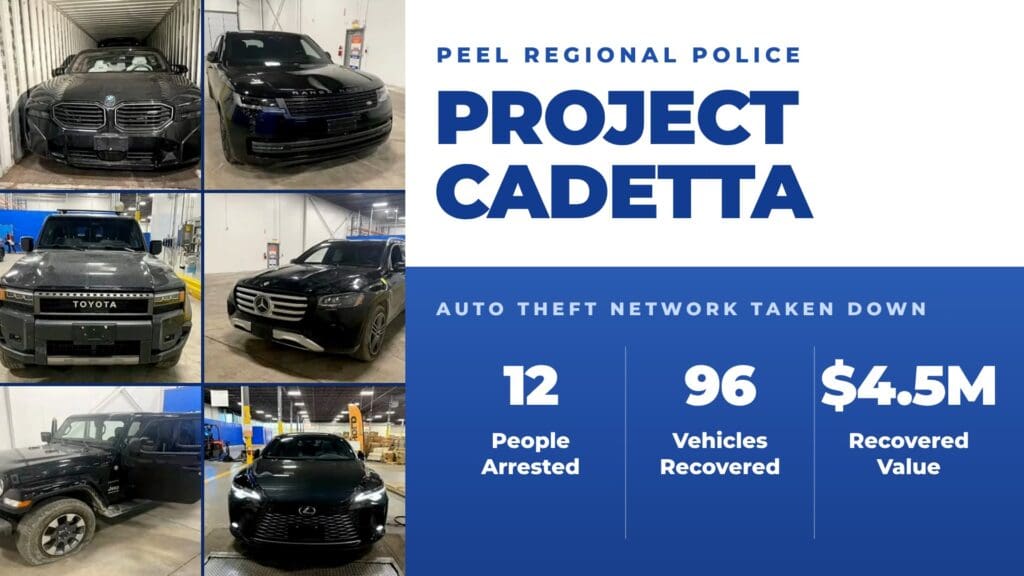
Project Cadetta began in March 2026, when Peel Regional Police's Commercial Auto Crime Bureau traced stolen vehicles to a warehouse here in Brampton. That one location led investigators to a network that stored stolen cars, loaded them into shipping containers and shipped them through Canadian ports, bound for West Africa.
The results:
- 12 people arrested
- 231 Criminal Code charges
- 96 stolen vehicles recovered
- About $4.5 million in recovered vehicle value
Warrants are out for more suspects, and the investigation is still active. Deputy Chief Nick Milinovich was clear about what this kind of crime really is: not just a property crime, but a violent, predatory business model run by transnational organized crime groups. The money from stolen cars funds other crimes. Cutting off that money matters.
Why it worked
No single agency could have done this alone. Project Cadetta worked because every level of government pulled in the same direction.
- More investigators. Peel Regional Police doubled the size of its auto theft unit, now one of the largest in the country.
- Border partners. Canada Border Services Agency officers in the GTA and Montreal examined suspect containers and helped identify members of the network.
- Provincial support. Ontario's Preventing Auto Thefts grant paid for four dedicated investigators and specialized equipment used in this investigation. The Province added another $6 million to the program in September.
- Advocacy that paid off. We pushed Ottawa hard for container scanners at the Port of Montreal and at rail hubs, and for police and border officials to stop working in silos. That coordination is now in place.
The trend speaks for itself. Auto theft in Peel is down more than 50 per cent from the 2023 peak, and it continues to fall this year. Federal bail changes under Bill C-14 are newer, and police say it is too early to judge their full effect. I will keep watching closely, and if more changes are needed, we will push for them.
What this means for your peace of mind
Numbers do not erase the feeling of being targeted. But the odds have changed. When a car is stolen in Peel today, it is far more likely to be tracked, found and stopped before it leaves the country, and the people behind it are far more likely to face charges.
You can help lower the risk further. Police recommend these simple steps:
- Keep your vehicle locked, every time.
- Use an immobilizer or another anti theft device.
- Install a video camera that covers your driveway.
- Stay aware of your surroundings, especially when parking.
If you see something suspicious, call Peel Regional Police at 905 453 3311, or call 911 if a crime is in progress.
A message from Mayor Brown
"This is not an easy place to steal a car anymore. The criminal networks behind these crimes are finding out, loud and clear, that Peel is not a place they can operate and do business. Thank you to Peel Regional Police for being the leaders in this country who helped get a crisis under control."
Mayor Patrick Brown